
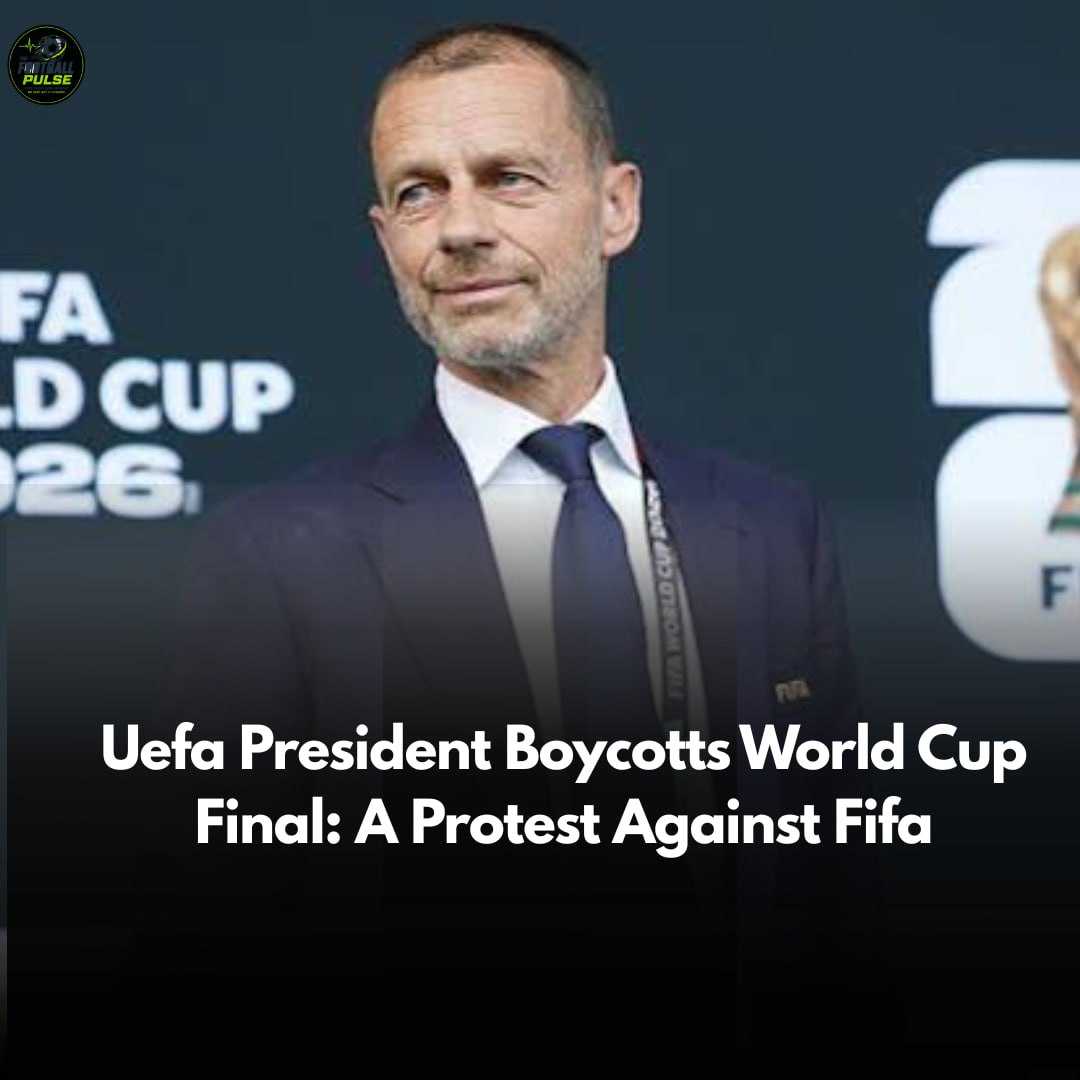
Uefa President Boycotts World Cup Final in Protest Against Fifa
TL;DR
- Aleksander Ceferin didn't attend the World Cup final in July 2026.
- His absence was a protest against Fifa's handling of Folarin Balogun's suspension.
- This marks a significant escalation in tensions between Uefa and Fifa.
Aleksander Ceferin’s absence from the World Cup final in July 2026 sent shockwaves across the football world. As Uefa’s president, his decision to boycott one of the sport’s biggest events highlights the deepening rift between Uefa and Fifa, intensified by political influences muddling sporting decisions. The implosion of relationship dynamics has fans and officials questioning the integrity of football governance on the highest stage.
A protest of this magnitude matters now more than ever, as the footballing authorities grapple with their respective roles amidst growing pressures. The implications of Ceferin’s stand go beyond the event itself — they symbolize a resistance against perceived injustices in sports management. With the backdrop of Fifa’s controversial dealings, particularly regarding player suspensions, tensions are at an all-time high.
Ceferin's Reasons for Boycotting
Ceferin's choice to turn his back on the World Cup final stems from Fifa's handling of the suspension of player Folarin Balogun. This incident has been seen as emblematic of the larger issues plaguing Fifa’s administration and its relations with other football organizations. As the Uefa president, Ceferin has consistently advocated for players' rights, making this protest particularly poignant.
The motives behind this action go deeper than just one player. The growing rift between Uefa and Fifa has been fueled by a series of miscommunications and political maneuverings that have compromised the essence of the game. Reports indicate that the tension has escalated due to the perception that political influence is altering decisions that should be purely sporting.
This demonstration of defiance raises questions about the Future landscape of international football governance. Can Uefa and Fifa mend their relationship, or will this rift only widen as both parties continue to navigate their political agendas?
Responses and Reactions
Fifa's response to Ceferin's boycott has been largely unfazed, at least publicly. Officials have reiterated their commitment to player welfare and the integrity of competitions. However, behind closed doors, it’s likely that this incident has sparked extensive discussions about the evolving relationship between these two governing bodies.
Many within the football community see Ceferin's actions as a much-needed wake-up call for Fifa, which has been under scrutiny for its decision-making processes. The sporting community is divided; some believe that this protest highlights essential issues that have been overlooked for far too long, while others fear it could further alienate the two governing bodies, complicating a resolution to their differences.
Ultimately, this protest raises critical questions about Fifa's governance and the implications for future tournaments, particularly with the upcoming discussions about expanding to a 64-team World Cup.
Looking to the Future
As football heads into a new era with the prospect of a 64-team World Cup, the timing of Ceferin’s protest couldn’t be more critical. The discussions regarding tournament structure and governance will take center stage in the coming months, and the relationship dynamics between Uefa and Fifa will be pivotal in determining how those plans unfold.
Fans are left wondering how this will impact their experience of the World Cup and international tournaments going forward. With more teams, would the competitive integrity of the tournament be compromised further, or could it lead to more exciting opportunities?
As the fallout from Ceferin's boycott continues, the football community must watch closely to see how this significant protest might catalyze change or further entrench divisions in the sport’s administration.
What You Need to Know
Frequently Asked Questions
Why did Uefa president Aleksander Ceferin boycott the World Cup final?
Ceferin’s boycott was a protest against Fifa's handling of the suspension of Folarin Balogun, reflecting deeper issues within football governance.What are the implications of Ceferin's boycott?
His absence signals a serious escalation in tensions between Uefa and Fifa, potentially influencing future governance and tournament structures.How has Fifa responded to the boycott?
Fifa has publicly reiterated its commitment to player welfare, however, the internal ramifications of Ceferin's actions are likely being deeply examined.What specific incidents led to the protest?
The protest was sparked by the decision to suspend Folarin Balogun, viewed as part of a broader pattern of political influences affecting Fifa's decisions.The world of football is waiting with bated breath. Ceferin's protest could be a turning point. As Uefa and Fifa navigate these choppy waters, fans should stay tuned for updates about governance changes and tournament formats that could shape the future of the beautiful game.


