
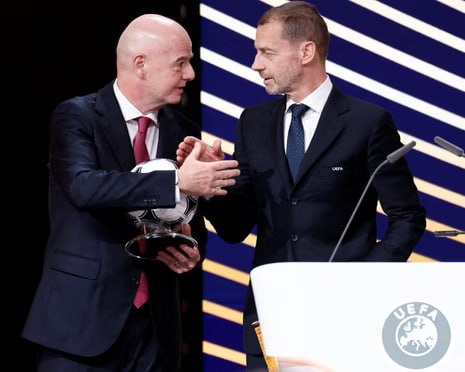
Is Infantino Finished? UEFA's Bold Boycott Gamble
TL;DR
- UEFA considers boycotting the World Cup over Infantino's $4.2 billion Funding plan.
- $30 million to be distributed among FIFA associations amid controversy.
- The next 53 days could determine the fate of Football’s biggest event.
Gianni Infantino's reign as Fifa President might be under threat. With 50 nations contemplating a boycott of the World Cup, spearheaded by Uefa, the drama around Infantino's $4.2 billion proposal to sell stakes has reached fever pitch. This unprecedented move has left fans and federations on edge, questioning the future of global football governance. Could this be the end for Infantino?
UEFA's challenge to FIFA's leadership comes at a time when football's political landscape is undergoing seismic shifts. Infantino's plan aims to distribute $30 million among FIFA's 211 member associations, a financial maneuver that some view as controversial. As Europe's governing body stands firm, the rest of the World watches, knowing this decision could reshape international football.
UEFA's Boycott: A Game-Changer or Empty Threat?
UEFA’s threat to boycott the World Cup has shaken the football community. This bold move, driven by frustration over Infantino's funding proposal, is seen as unprecedented. According to Sky Sports, the $4.2 billion plan has ignited a fierce debate over football's financial future.
The proposed sale of stakes is a first in FIFA's history. Critics argue it prioritizes profit over the sport's integrity, reminiscent of past controversies in the game. This discord has stirred memories of FIFA's troubled history with governance.
For supporters, this isn't just about financials. It’s about preserving the soul of football. What does this mean for fans? A World Cup without Europe could lose its global appeal, impacting the game's cultural and competitive fabric.
Infantino's Proposal: Progress or Pitfall?
Infantino's strategy to sell World Cup stakes is touted as a means to boost FIFA's coffers, distributing $30 million to member associations. However, the backlash from UEFA signifies deep concerns. As reported by The New York Times, this initiative is dividing opinions across continents.
Historic attempts to commercialize the game often faced resistance. Yet, Infantino insists this plan is vital for sustaining football's future, echoing past leadership's promises. Could this financial approach backfire, or is it the innovation football governance needs?
The ramifications of this approach extend beyond the pitch. If successful, it might set a precedent for future FIFA policies. But with 53 days to gain backing, the clock is ticking. Infantino's legacy hangs in the balance, leaving many to ask: is he leading global football into uncharted waters?
Tactical Responses from Other Confederations
Reactions from non-European football confederations remain varied. Some, like the Asian Football Confederation, express tentative support. Others watch cautiously, aware that UEFA's boycott could disrupt international harmony. Al Jazeera reports that unity within FIFA is increasingly fragile.
Historically, FIFA's unified front has been its strength. But with 50 nations discussing withdrawal, that unity faces its sternest test. The concept of a World Cup, the pinnacle of football's global vision, might face an existential threat if Infantino cannot assuage fears.
What's clear is the global game's delicate balance of power. A divide among regions could lead to a fractured tournament structure. Could this pressure lead Infantino to modify his proposal, preserving his leadership?
What Lies Ahead for FIFA and Global Football?
Football faces a crossroads unlike any before. Infantino's plan could either revitalize the sport's financial model or deepen existing rifts. UEFA's stance signals a shift towards accountability and governance reforms, challenging the status quo.
Fans worldwide are caught in this unfolding drama. The next 53 days are critical for Infantino to secure backing or face potential fallout from this crisis. Whether FIFA can navigate this storm with minimal damage remains uncertain.
International football's future hangs in the balance. Can the game’s global unity survive this test, or are we looking at a new era of divided competitions?
What You Need to Know
Frequently Asked Questions
What led UEFA to consider a boycott of the World Cup?
UEFA's boycott consideration stems from dissatisfaction with Infantino's $4.2 billion plan to sell World Cup stakes, which many perceive as prioritizing profits over the sport's integrity.How does Infantino's funding plan affect global football?
Infantino's funding plan involves a significant financial boost for FIFA, but it risks fragmenting fan bases and creating division among football's global community.What are the implications of a UEFA boycott for FIFA?
A UEFA boycott could undermine FIFA's authority and devalue the World Cup's cultural and competitive significance, challenging the organization's leadership and governance.How has the reaction been from other football confederations regarding Infantino?
Responses from other confederations have been mixed, with some showing cautious support and others wary of the long-term implications for football governance.Looking ahead, key decisions loom over the next few weeks. With UEFA's firm stance and FIFA's financial maneuvers, football is at a critical juncture. Fans worldwide should keep an eye on 53 pivotal days that could change the sport forever.


